In most cases, the answer is yes. Longer answer: it depends on your roof, your usage, and how patient you are with the myth.
London gets less peak sunshine than, say, Devon or Cornwall, but it makes up for it in one important way: electricity here tends to cost more, and homes here use plenty of it. A typical semi-detached or terraced property with a 4kW system can expect to shave several hundred pounds off annual electricity costs, and that’s before you factor in the Smart Export Guarantee, which pays you for the electricity you don’t use yourself and send back to the grid.
The payback period on a well-specified system usually lands somewhere between 8 and 12 years, and with panels typically warrantied for 25 years, that leaves well over a decade of essentially free electricity once the system’s paid for itself. None of that changes overnight, but it’s a steadier bet than most people expect.
Here’s where most of the horror stories start, not with the panels themselves, but with who’s fitting them.
MCS certification is the baseline, not a bonus. Without it, you won’t qualify for the Smart Export Guarantee, and any electrical work won’t be properly signed off under Building Regulations. Beyond that, look for RECC membership, which covers how a company sells and contracts with you, and check whether they carry an insurance-backed warranty that survives even if the company itself doesn’t.
A good installer in London will also be familiar with the city’s quirks, without needing you to explain them. Conservation area rules, Article 4 directions in certain boroughs, and terraced roofs that need careful scaffolding logistics on a narrow street. Ask a potential installer how many jobs they’ve done on a road like yours. If they hesitate, that tells you something.
One more thing worth asking directly: is scaffolding included in the quote or added on afterwards? Some companies bury it as an extra once you’ve already committed, and on a London terrace, it can easily add a few hundred pounds you didn’t budget for.
For the vast majority of London homes, no. Solar panels fall under permitted development, meaning you can install them without a planning application, provided the panels don’t project more than 200mm from a pitched roof, don’t sit above the highest point of the roof, and aren’t mounted on a wall facing the street in a conservation area.
Where it gets more involved is if your home is listed, or sits inside a conservation area with an Article 4 direction in place, both of which are more common across London than in most of the country. Listed buildings need listed building consent regardless of anything else, and some conservation areas remove permitted development rights entirely for street-facing roof slopes.
A properly experienced installer will check this for you before quoting, not after. If you want certainty in writing, you can also apply for a Lawful Development Certificate through your council, which confirms your installation doesn’t need permission and protects you if the question ever comes up when you sell the property.
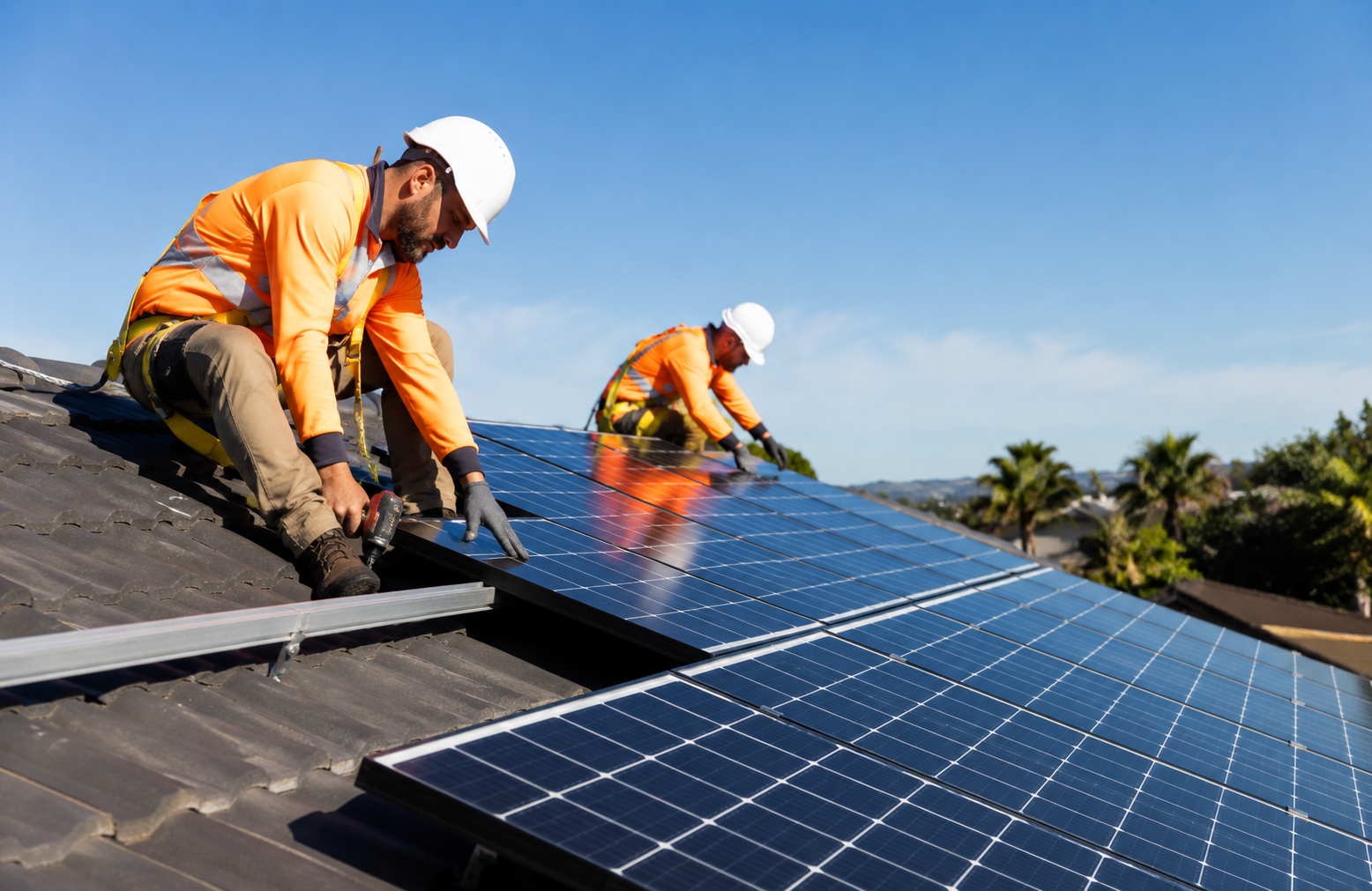
Less drama than people expect, honestly. Scaffolding usually goes up a day or two before the actual fitting, then a two-person installation team spends most of a single day mounting the panels, running the wiring, and fitting the inverter, which is the part of the system that turns the DC electricity your panels generate into the AC electricity your home actually uses.
Once everything’s connected, your installer commissions the system, registers it with your Distribution Network Operator, and hands over the paperwork you’ll need for the Smart Export Guarantee and any warranty claims down the line. From that point, it’s mostly a case of switching things on and watching the generation numbers on your monitoring app for the first time.
A 4kW system on a typical London home can realistically knock £400 to £650 off annual electricity costs, purely from using the power you generate. Add export payments through the Smart Export Guarantee, and that figure climbs further, sometimes pushing total annual value closer to £700 to £900 depending on your tariff and how much you’re home during daylight hours.
A battery changes the equation again. Instead of exporting spare daytime generation for a few pence a unit and buying it back in the evening for considerably more, you store it and use it after dark. It costs more upfront and stretches the payback period by a couple of years, but for households that are out during the day and home in the evening, it often makes the whole system work harder.
MAK Energy Ltd | MCS, RECC & IWA Accredited | Serving London and the South East since 2007