Why you need a dedicated EV home charger
Most people try a standard three-pin plug first. And it actually works, but you are only gaining about 6 miles of range for every hour plugged in. That is fine for a short top-up, but if you have come home with a flat battery, you will be waiting a long time before you can drive again.
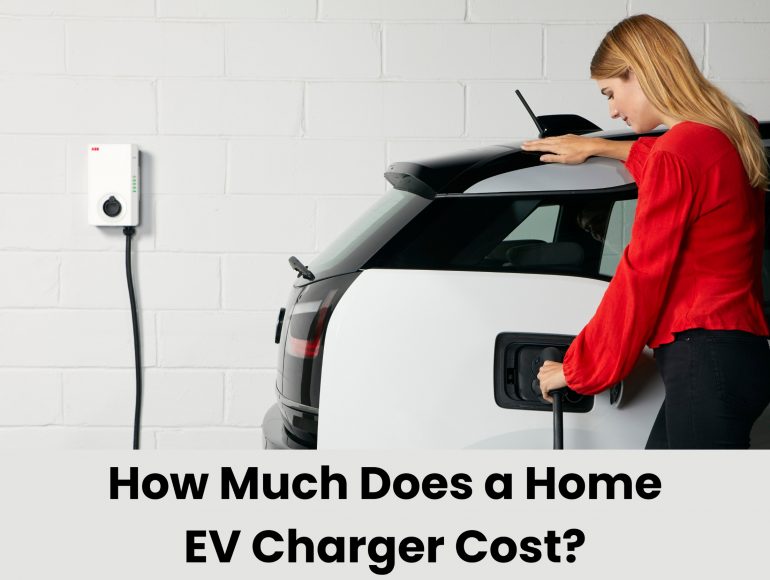
A proper EV home charger runs at 7kW and delivers roughly 19 miles of range per hour, which means most EVs go from low to full overnight without any effort on your part. On top of the speed, home chargers come with built-in safety features, overload protection, weatherproofing, and fault detection that a domestic socket simply does not have.
The bigger advantage is smart scheduling. Every charger on this list lets you set a charging window, so your car fills up during the cheapest hours of the day. On a time-of-use tariff like Intelligent Octopus Go, overnight rates can be a fraction of the standard unit price. Over a full year, a smart EV charger can save EV drivers hundreds of pounds compared with charging at random times or on the public network.
If you also have solar panels, certain chargers can redirect your surplus generation straight into the car rather than exporting it to the grid. That is free miles from the energy you were already producing.
How much does EV charger installation cost?
EV Charger installation costs in the UK typically start at around £900, which covers both the unit and the installation. That figure rises depending on the charger you choose, how far your consumer unit is from the installation point, and whether any groundwork is needed on your driveway.
It sounds significant upfront, but most owners recoup the cost within a couple of years through the savings on charging. Finance options are available from most installers, so you are not necessarily paying everything at once.
When you search for EV charger installation near me, always look for an OZEV-approved installer. They will carry the right accreditations, do a site survey before confirming a price, and make sure everything is wired safely and correctly. The survey should always be free.
Best home EV chargers UK 2025, our picks
We have selected these based on real-world use, features, and customer feedback. Each one has something different to offer, so read through to find the right fit for your home and your car.
1. Easee One
The Easee One is the charger we recommend to most EV owners, and it is not a difficult call. It sits at the top of the market for a reason; it does almost everything well without asking you to compromise on anything obvious.
Design is one of its strongest points. It comes in multiple colours, the faceplates are swappable if you ever want to change things up, and it genuinely looks good on the side of a house rather than just functional. More usefully, it works as either a tethered or untethered unit, depending on your preference. Tethered means the cable is always attached and ready to use. Untethered means you plug in your own cable each time, which tends to suit households with more than one EV or different connector types.
The Easee app handles scheduling, cost tracking, and usage history without being overwhelming. And since Easee launched the Equalizer accessory, Easee One owners can now route surplus solar energy straight into the car, which pushes it even further ahead for households with panels already installed.
Pros
- Tethered or untethered flexibility
- Built-in PEN fault detection
- No earth rod required
- Sleek, customisable design
- Solar integration via Equalizer
- Solar functions need the Equalizer add-on
- The app lacks some advanced features
2. Hypervolt Home 3 Pro
Hypervolt has built a genuine following in the UK EV charging market, and the Home 3 Pro shows exactly why. The front face is bold, with LED lighting, strong colours, and a size that does not attempt to hide itself. If you want your charger to be a feature rather than something tucked away, this is the one.
That said, the substance behind the look is just as solid. The built-in cable tidy keeps things neat when you are not charging, solar compatibility is included as standard rather than an optional extra, and the app is one of the most polished in this category. Scheduling, cost tracking, and live usage data are all there and easy to access.
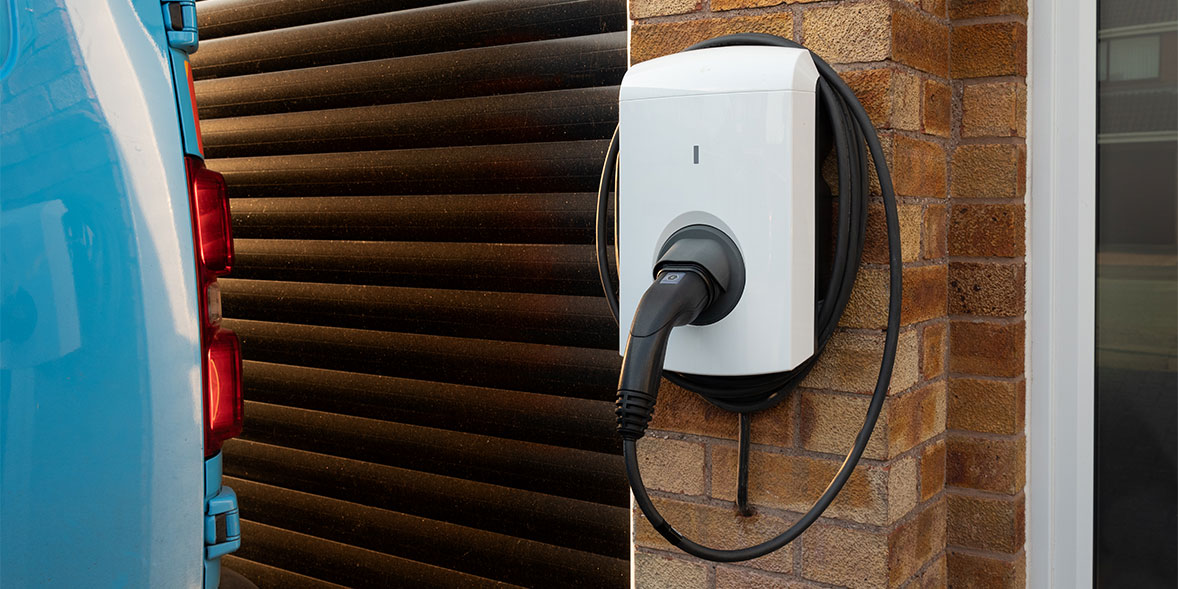
It also supports both Intelligent Octopus Go and OVO Charge Anytime natively, which means automatic tariff-optimized charging without needing a compatible vehicle API. That is a meaningful advantage if your car does not support direct energy tariff integration.
Pros
- Bold, distinctive design
- Built-in cable tidy
- Solar integration included
- Polished app interface
- Octopus Go & OVO Charge Anytime support
- Design may feel too bold for some
- Physically quite large
3. Vchrgd Seven
The Vchrgd Seven does not win any prizes for looks. The design is functional rather than refined, and the build feels less premium than the Easee or Hypervolt at close range. But if you are mainly focused on getting a capable smart charger installed without paying over the odds, this does the job well.
For the price, it includes a surprising number of features. Solar integration, smart scheduling, cost tracking, and a cable tidy are all part of the package. The app holds up in day-to-day use, and the customer service reputation is consistently strong. It is also one of the more affordable ways to get onto Intelligent Octopus Go, which alone can justify the purchase for drivers on that tariff.
Pros
- Solar integration at a budget price
- Tethered or untethered options
- Capable app with smart scheduling
- Competitive customer service
- Build quality feels basic
- Less compact than rivals
4. Ohme Home Pro
Most smart EV chargers let you schedule a charging window manually. The Ohme Home Pro does something even more interesting: it connects directly to your energy tariff and calculates the optimum schedule for you in real-time.
You tell it what charge level you need and by when. It handles the rest. If your tariff has variable rates across the night, the Ohme will prioritize the cheapest periods and still hit your target. Octopus Energy customers, in particular, get a seamless experience that is hard to match on any other charger.
The built-in LCD screen is a genuine plus for those who would rather not reach for a phone every time they want to check or adjust a setting. Maximum charge speed is 7.4kW, giving around 30 miles of range per hour on compatible vehicles. The only real limitations are the lack of solar compatibility and the fact that some of the smarter features require an API-connected vehicle to work. Ohme publishes a full list of compatible models on their website.
Pros
- Built-in LCD screen for direct control
- Automated tariff-optimized scheduling
- PEN fault detection, no earth rod
- Best-in-class Octopus integration
- Up to 30 miles per hour charging
- Not currently solar compatible
- Some vehicles not fully compatible
5. Ohme ePod
Everything that makes the Ohme Home Pro worth recommending applies equally to the ePod. The software is identical, same tariff integration, same scheduling intelligence, same Octopus Energy compatibility. The difference is in the form.
The ePod is untethered as standard, which means no cable permanently hanging from the wall. For households with a wide driveway or multiple vehicles, choosing your own cable length makes a real practical difference. The unit itself is noticeably more compact than the Home Pro, and a lot of owners simply prefer the cleaner look of an untethered charger.
There is no screen, but the ePod retains physical buttons, a rarity among modern home chargers, most of which rely entirely on apps. If you are drawn to Ohme’s charging intelligence but prefer the flexibility and tidiness of an untethered setup, this is the obvious choice over the Home Pro.
Pros
- Same smart tariff features as Home Pro
- Compact, discreet design
- Physical buttons on the unit
- Flexible cable length options
- PEN fault detection is built in
- No built-in screen
- Not solar compatible
- Some vehicle compatibility limits
6. Andersen A3
The Andersen A3 is what happens when someone decides an EV charger should be designed rather than just manufactured. The finish options are unlike anything else in this category, with multiple colours, materials, and the option of Accoya wood, which looks genuinely beautiful against a rendered or brick wall.
The cable storage is the most considered of any tethered charger on the market. The 5.5m cable retracts fully into the body of the unit, hidden behind brushes that clean and dry it as you put it away. When the car is not charging, there is nothing visible. That is a significant step up from a hook and holster.
The app supports solar diversion for panel owners, and the Andersen app itself is clean and easy to use. If you are spending serious money on a driveway renovation or you simply want a charger that matches the quality of your home, the A3 is hard to argue with. Finance is available to spread the cost if the upfront figure is a stretch.
Pros
- Exceptional design and finish options
- Cable is hidden fully inside the unit
- Accoya wood finish available
- Solar compatible via app
- Finance from £18.77/month
- Premium design comes at a premium price
7. MyEnergi Zappi
If your home has solar panels, the Zappi belongs at the top of your shortlist. It is the original solar EV charger in the UK, designed by Lincolnshire-based MyEnergi specifically to work with on-site renewable generation rather than just the grid.
The three charging modes are what set it apart. Fast mode draws straight from the grid like any standard charger. Eco mode blends solar surplus with grid power to keep charging going even when generation is low. Eco+ mode holds back and charges only when there is enough surplus solar to cover the full draw, so on a good day, you are running entirely on energy your panels have already produced. For a typical 4kWp solar system, that can mean somewhere in the region of £288 to £432 worth of free charging per year, simply from energy that would otherwise have been exported to the grid at a lower rate.
Beyond solar, the Zappi covers the standard smart charger bases well. The built-in LCD screen lets you check charging status and power consumption without opening an app, which is genuinely useful on a rainy morning. It is compatible with Intelligent Octopus Go for tariff-based scheduling, and the MyEnergi app brings everything together, including other devices in the ecosystem like the Eddi hot water diverter and Libbi home battery.
Ready to install your home EV charger?
MAK Energy supplies and installs the UK’s leading EV chargers, fully fitted by OZEV-approved engineers with zero hassle from start to finish. Get in touch today, and we’ll help you find the right charger for your home, your car, and your energy setup.