
Last updated: January 2nd, 2026 at 05:26 am
For a long time, people thought solar panels were just for those who wanted to save the planet. It was a nice thing to do, a bit like recycling your yogurt pots or carrying a reusable straw, but it wasn’t exactly a must-have for the average British homeowner. You’d see them on the odd roof and think, “Good for them,” but you probably didn’t feel like you were missing out.
In 2026, it will have totally changed. Whether it’s your family home, a rental property, or a commercial building, Solar Panels and batteries have shifted from being an eco-luxury to one of the smartest financial moves you can make. At MAK Energy, we’ve seen it happen: the conversation isn’t just about carbon footprints anymore. It’s about property value, monthly cash flow, and taking back control from energy companies that have had us over a barrel for years.
The truth is, in 2026, the sun isn’t just for summer; it’s for your bank account.
Let’s Talk About the Cost (The Part Everyone Dreads)
We won’t sugarcoat it, but everyone knows the biggest hurdle is the price tag. I’ve sat with enough people to know that when you hear the initial quote, it can feel a bit like a punch to the stomach.
Putting a quality solar array on a standard three-bedroom house usually costs between £5,000 and £9,000. If you’re smart and add a battery (which you should, so you can actually use your power after the sun goes down), you’re looking at another £3,000 to £7,000. For a business, those numbers can climb into the tens of thousands.
It feels like a massive amount to pay up front. But here’s the reality: the way we pay for solar has completely evolved.
At MAK Energy, we’re seeing more and more people move away from the big one-off check. Nowadays, there are plenty of financing plans that let you spread that cost into manageable monthly payments. Instead of one giant, scary bill, you pay a monthly amount, often using the exact money you’re already saving on your electricity. It’s essentially swapping a dead expense for an investment
Does It Actually Make Your Property Worth More?
This is the million-dollar question. If you spend £10,000 on a new kitchen, you hope it adds value to the house. Solar is no different, but the evidence is even stronger.
Think about it from a buyer’s perspective. If you were looking at two identical houses on the same street, but one had a £1,200-a-year electricity bill, and the other made its own power for free, which one would you pick?
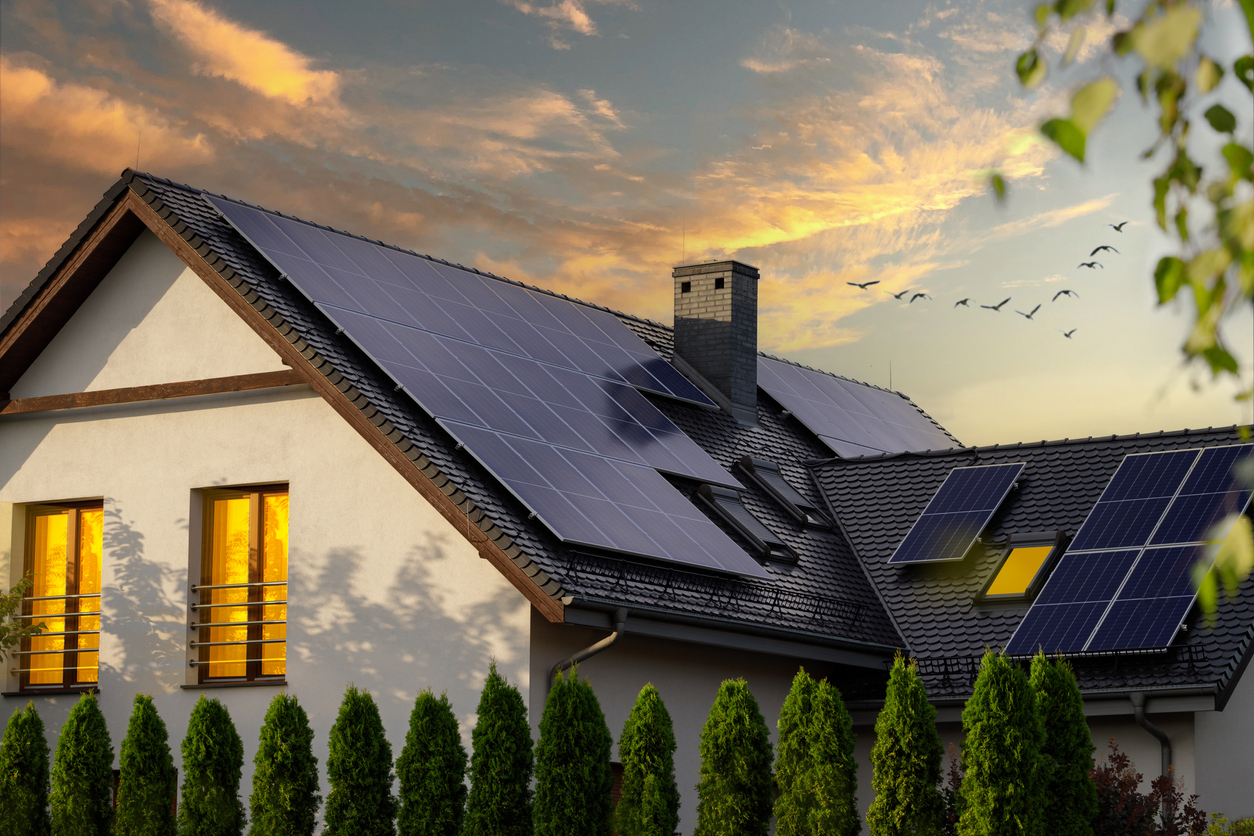
Recent property studies in the UK show that solar panels can jump your home’s value by about 6-7%. Some reports from early 2025 even suggest that a well-installed system can add over £11,000 to a house price.
And if you’re a landlord, the news is even better. The UK government is getting stricter on Energy Performance Certificate (EPC) ratings. A C rating is becoming the gold standard. By adding solar, you aren’t just making the house greener; you’re also making it more compliant with future rental rules and far more attractive to tenants who are eager to lower their living costs.
Real Savings You Can See
Let’s get into the nitty-gritty of the monthly math. If you live in a normal three-bed home, you could be saving between £600 and £1,000 a year.
Most of the systems we install today pay for themselves in about 5 to 12 years. Now, I know what you’re thinking: 12 years is a long time! However, remember that modern solar panels are designed to last 25 to 30 years.
Once you hit that payback point, you’ve got nearly two decades of free power. It’s like buying a car, and after a few years, the petrol station starts giving you fuel for free. Plus, thanks to the Smart Export Guarantee (SEG), you can actually sell your leftover electricity back to the grid. In 2026, some export tariffs will be paying as much as 15p to 25p per kWh. It’s not going to make you a millionaire, but it’s a very satisfying way to watch your meter move in the right direction.
To get more information, The Best SEG Tariffs in the UK – Tariff Table (2024)
No More Stress Over Energy Shock
We have all seen energy prices go absolutely haywire. One minute they’re up, the next they’re—well, they’re usually still up. It’s exhausting to open an email from your provider and wonder if your monthly direct debit is about to double.
Solar gives you independence. When you have panels and a battery, you aren’t just a customer anymore; you’re the boss. You become a mini power station.
With a battery, you can store the energy you made at 2:00 PM and use it to cook dinner at 7:00 PM when the grid is charging everyone else at peak prices. You use your own free energy when the sun is out, and you only lean on the grid when you absolutely have to. That peace of mind knowing that your bills are mostly locked in regardless of what’s happening in the world is worth just as much as the actual cash savings.
The Invisible Benefits of Solar PV Systems
We’re moving toward a world of electric cars (EVs) and electric heating (heat pumps). Your fuel for your car and your gas for your boiler are both going to come from your plug sockets.
If you don’t have solar, your fuel costs are going to go up as you use more electricity. If you do have solar, you’re basically growing your own fuel on your roof. At MAK Energy, we’re helping people set up smart homes where the solar panels talk to the car charger, making sure the car only fills up when there’s free sun available. It’s like having a private petrol station in your driveway that never charges you.
Summary
We have been in this industry a long time, and we’ve seen the shift happen. Solar isn’t a nice-to-have hobby for people with big gardens and even bigger hearts. It’s a financial tool. It’s a way to protect your money from inflation, boost your property’s value, and stop the bill anxiety that has hit so many UK households.
At MAK Energy, we don’t just bolt blue squares to your roof. We help you build a system that makes sense for your life and your wallet. Whether you’re a homeowner looking to save for retirement or a business owner looking to slash overheads, the answer is usually staring you in the face every morning when the sun comes up.
FAQs
1. Do I need to clean my solar panels every week to keep them working?
No, the UK rain does most of the cleaning for you. Just a professional rinse once a year and a quick check for nesting birds is plenty to keep them running.