Solar technology has evolved far beyond the clunky, fragile designs of the past. Today’s systems are sleek, durable, and designed to last 20 to 25 years while operating almost silently. Depending on your pool type and how often you swim, there are several ways to capture that warmth.
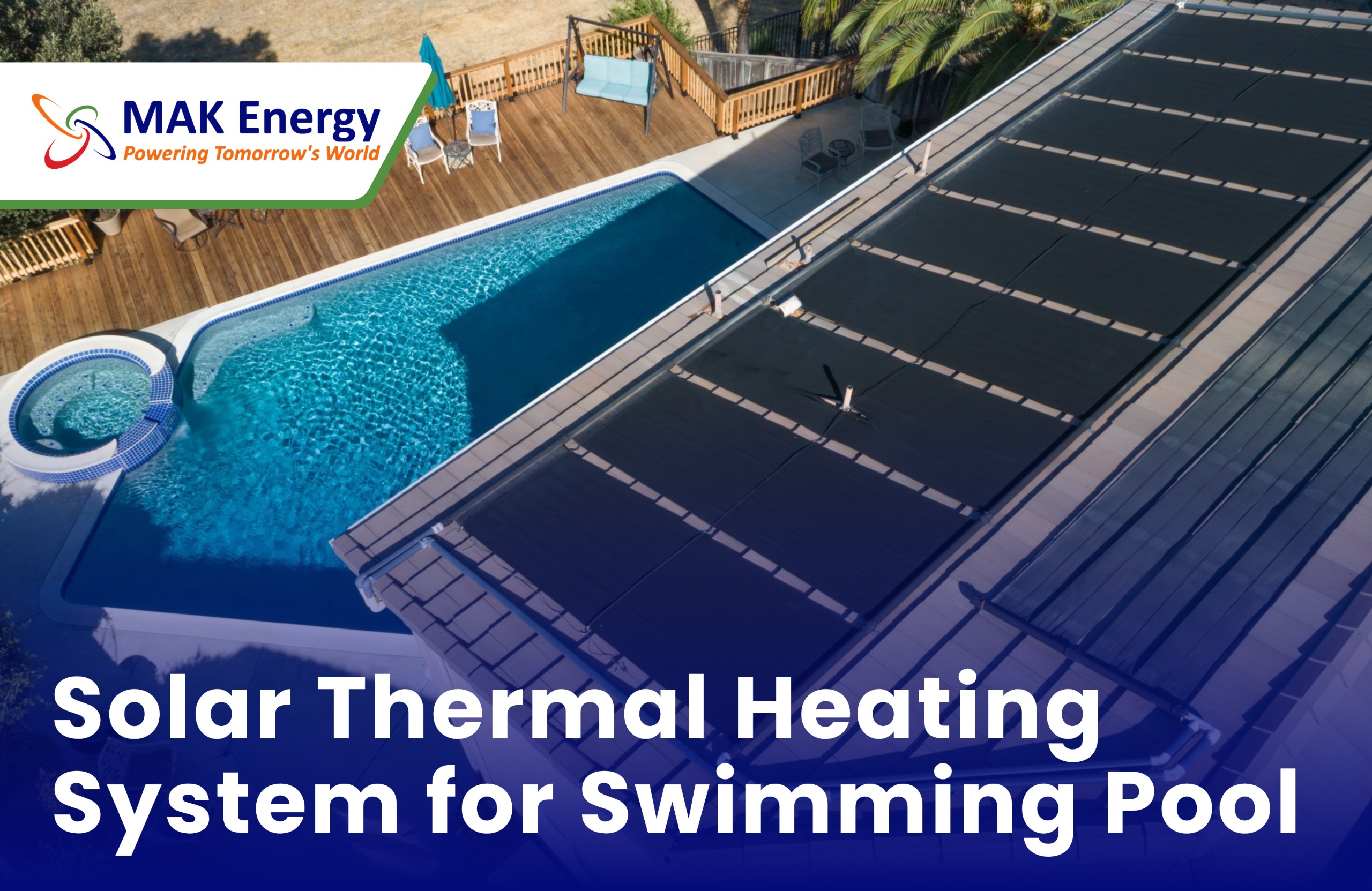
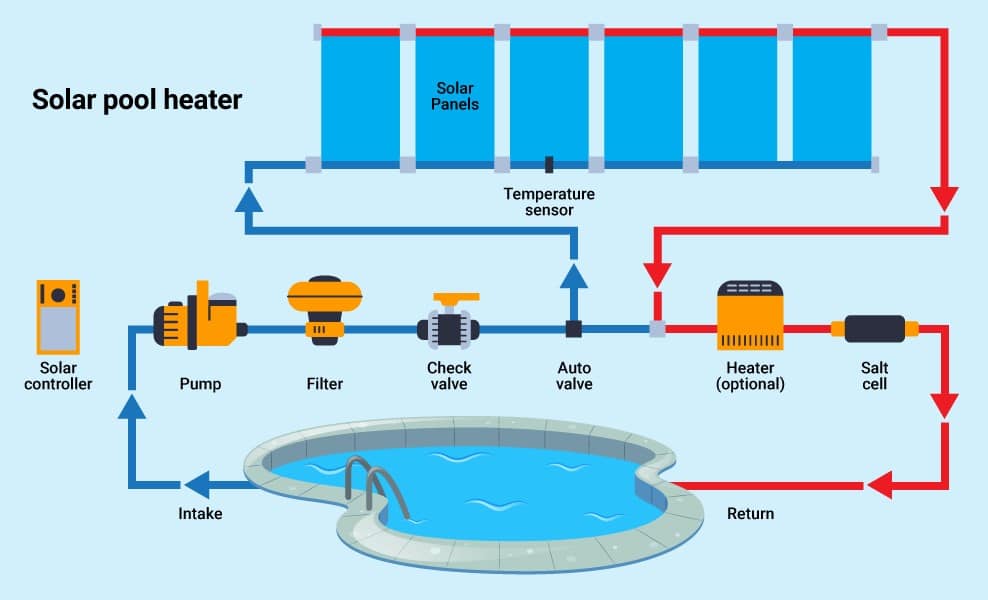
This is the most straightforward entry point for summer swimmers. These mats consist of UV-stabilized PVC strips that connect directly to your filtration plant.
As the water flows through the thin channels in the matting, it absorbs the sun’s heat quickly. It’s an ideal way to bump your pool temperature up by several degrees without any ongoing maintenance costs.
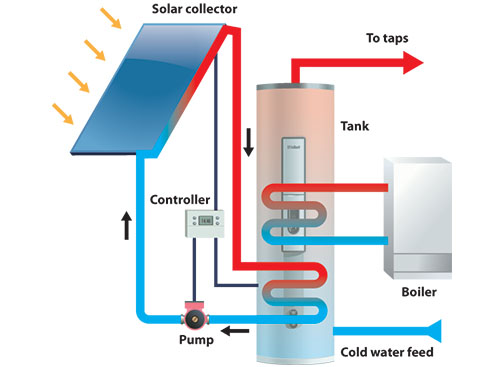
These are the stalwarts of the industry. A flat plate collector uses a dark absorber plate protected by a transparent glass cover.
This glazed design creates a greenhouse effect, trapping heat and preventing it from escaping back into the air. They are particularly effective for UK gardens because they continue to perform well even when there is a bit of a breeze.
If you have an indoor pool or want to swim well into the autumn, vacuum tubes are the premium choice. These collectors use glass tubes with a vacuum seal to eliminate heat loss entirely.
While they are often used for domestic hot water because they can reach very high temperatures, they are incredibly efficient at keeping a pool steady at 26–28°C regardless of the outside air temperature.
For those with limited space, pods offer a clever, modular solution. These compact domes house coiled piping that acts as a miniature furnace. You can start with one and simply add more as needed.
Because they are ground-based and portable, they work perfectly for both in-ground and above-ground pools, giving you flexibility that roof-mounted panels cannot.
Efficiency isn’t just about the panels; it is about where they sit. To get the most out of your investment, we look for south-facing roof space within 30 meters of your pool filtration system.
This proximity prevents heat from escaping through long pipe runs. We also ensure that the materials used—from the PVC piping to the stainless steel fittings, are built to handle the specific chemical environment of a swimming pool.
The result is a system that doesn’t just work; it lasts for decades with minimal intervention.