Most people who go through a solar panel installation end up with two things they didn’t expect: a bill that surprised them, and a process that confused them. Not because the installers were dishonest. But because nobody sat them down beforehand and actually talked it through.
Today, that changes. By the time you finish reading this, you’ll know how solar panels work, what they actually cost, what the installation process looks like in real life, and what questions to ask before you ever let someone onto your roof. Whether you’re in the UK or anywhere else, this is the conversation you should have had from the start.
Let's Start With the Honest Question: How Do Solar Panels Actually Work?
You don’t need a physics degree here, just a clear picture. Solar panels are made up of photovoltaic (PV) cells, and those cells do one job: they absorb sunlight and turn it into direct current (DC) electricity. That electricity then passes through an inverter, which converts it into the alternating current (AC) that your kettle, TV, and boiler actually run on.
On a clear summer day, a well-installed system can cover almost all of a typical home’s energy needs.
Any electricity your home doesn’t use either gets stored in a battery or gets exported back to the grid, and under the Smart Export Guarantee (SEG) in the UK, you can actually get paid for that export. So the system isn’t just cutting your bills; it can contribute to your income.
Solar Panel Cost: The Number Everyone Wants, and Why It's Not Simple
This is where the conversation usually falls apart. Someone Googles ‘solar panel cost’ and finds a range anywhere from £4,000 to £15,000, closes the tab, and gives up.
The truth is that range is real, and the reason it exists is genuinely worth understanding.
The cost of solar panels for home installation depends on a handful of specific things: how many panels you need (which depends on your energy usage and roof space); the type and quality of panels you choose; whether you’re adding battery storage; and the complexity of the installation itself, including scaffolding, roof pitch, existing wiring, and that sort of thing.
A rough starting point for a typical three-bedroom home in the UK is a 4kWp system, and that tends to fall in the £6,000–£8,000 range.
Add battery storage, and you’re looking at another £2,000–£4,000 on top. But here’s the part worth sitting with: the average payback period in the UK right now, given current energy prices, is somewhere between 7 and 10 years. After that, the electricity is essentially free.
What doesn’t get said enough is that an accurate price only comes after a proper site survey.
What Solar Panel Installation Actually Looks Like
People imagine solar PV installation as this massive, disruptive project. It really isn’t. In most cases, from the moment the installers arrive to the moment you’re generating electricity is one to two days.
It starts with scaffolding going up the night before or the morning of.
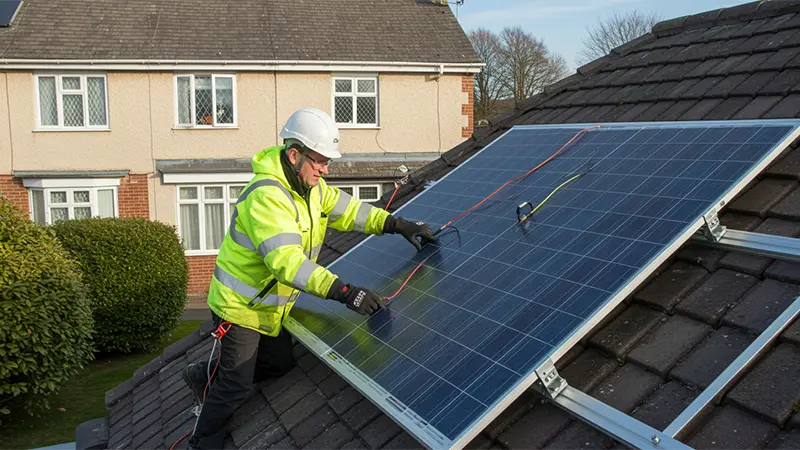
- Then the roofers fix the mounting rails to your roof structure, not just the tiles, but the actual rafters underneath, which is what gives the whole system its structural stability.
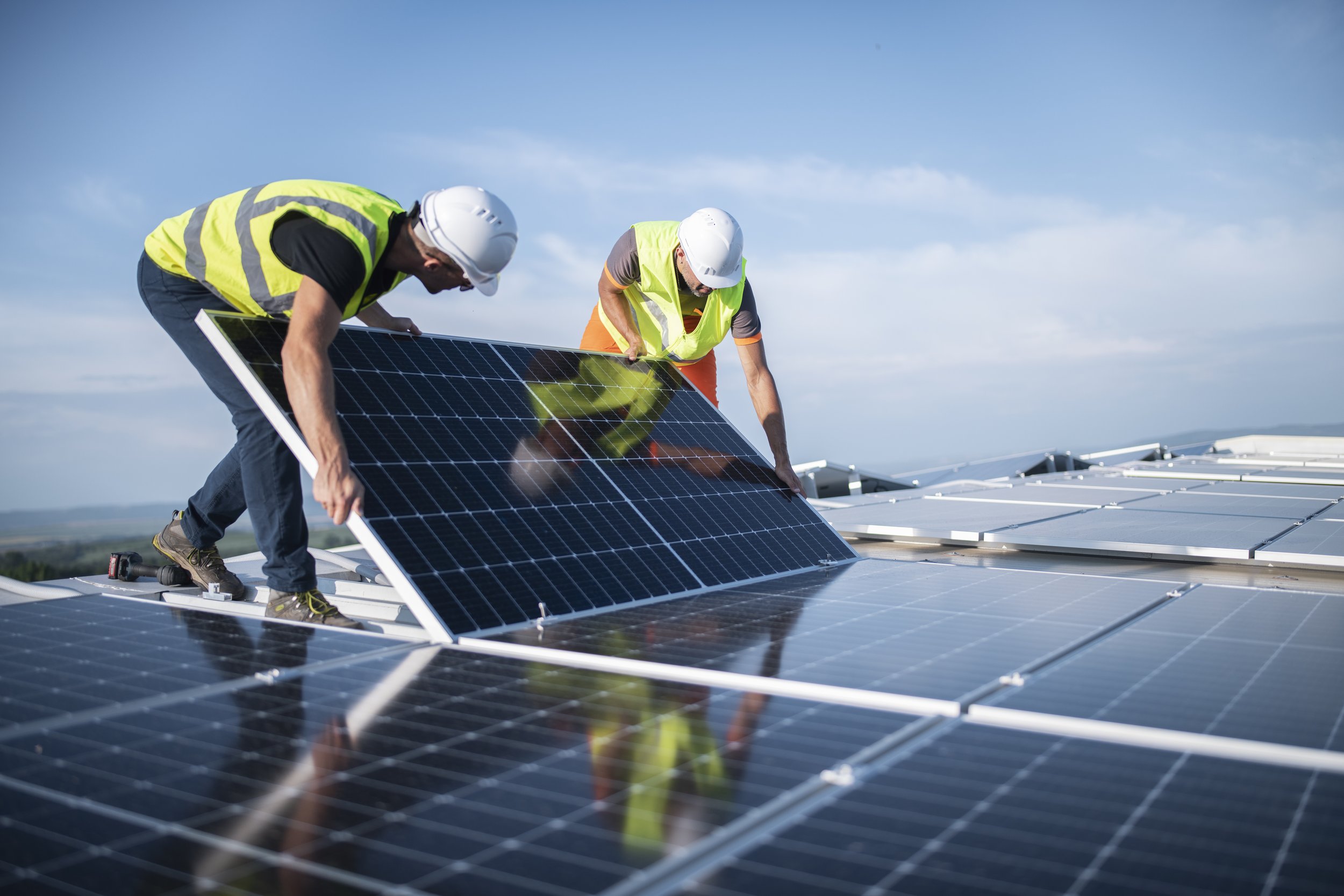
- The panels are then clipped into those rails, cabled down through the roof space, connected to the inverter (usually in the loft or garage), and wired into your consumer unit.
- Once installed, the system gets commissioned, meaning the inverter is switched on, tested, and configured. Your installer should walk you through the monitoring app or display at that point, showing you live generation data. If they leave without doing that, ask.
- You’re entitled to understand what your system is doing.
- After installation, your installer handles the DNO (Distribution Network Operator) notification and your Smart Export Guarantee registration. These are paperwork steps, but they’re important.
- The DNO needs to know about your grid-connected system, and without SEG registration, you won’t be paid for the electricity you export.
How to Find the Right Solar Panel Installers Near You
When you start searching for solar panel installers near me, you’re going to find a lot of names. Some will be great. Some will be convincing but not great. A few things are non-negotiable when making this choice.
- First, MCS certification.
- The Microgeneration Certification Scheme is the industry standard in the UK, and without it, you can’t access the Smart Export Guarantee. Any installer not holding MCS accreditation should give you pause.
- Second, check whether they offer a genuine consultation before the quote, not a sales call, but an actual assessment of your home, your usage, and your goals. That distinction matters enormously.
- Third, ask about aftercare. Solar panels have a lifespan of 25 to 30 years. Your relationship with whoever installs them shouldn’t end the day they pack up the scaffolding.
At MAK Energy, aftercare and system monitoring support are part of the service, because a system that quietly underperforms for five years is a real problem, and you won’t know without someone keeping an eye on it.
The consultation gap that is often overlooked
A huge number of homeowners who’ve had solar panels installed in the last few years across the UK and beyond end up with systems that are technically fine but don’t actually fit how they live. Panels sized for a family of four on a west-facing roof when the family is out all day, and the roof faces north-east. Battery storage was added because it sounded good, not because their pattern of use justified it.
A real consultation, the kind MAK Energy leads with, looks at your energy bills month by month, understands when you use power and when you don’t, assesses your roof in detail, and then designs a system around your actual life, not around a catalog.
FAQ
Do solar panels work in the UK climate?
Absolutely, and this is one of the most common misconceptions we come across. Solar panels generate electricity from daylight, not direct sunshine, which means even on a cloudy British day, your system is producing energy.
The UK’s solar capacity has grown significantly over the past decade precisely because the technology performs well here.
What is the realistic solar panel cost for a home in the UK?
For most homes, a properly sized system with installation runs between £6,000 and £9,000, and with current energy prices, most homeowners see a full return on that investment within 7 to 10 years.
After that, you’re generating free electricity for another 15 to 20 years on top.
How long does solar panel installation take?
For most homes, the physical installation takes one to two days. The process includes mounting the panels, running cables, fitting the inverter, and commissioning the system. Any additional paperwork, DNO notification, and SEG registration are handled by your installer in the days that follow.