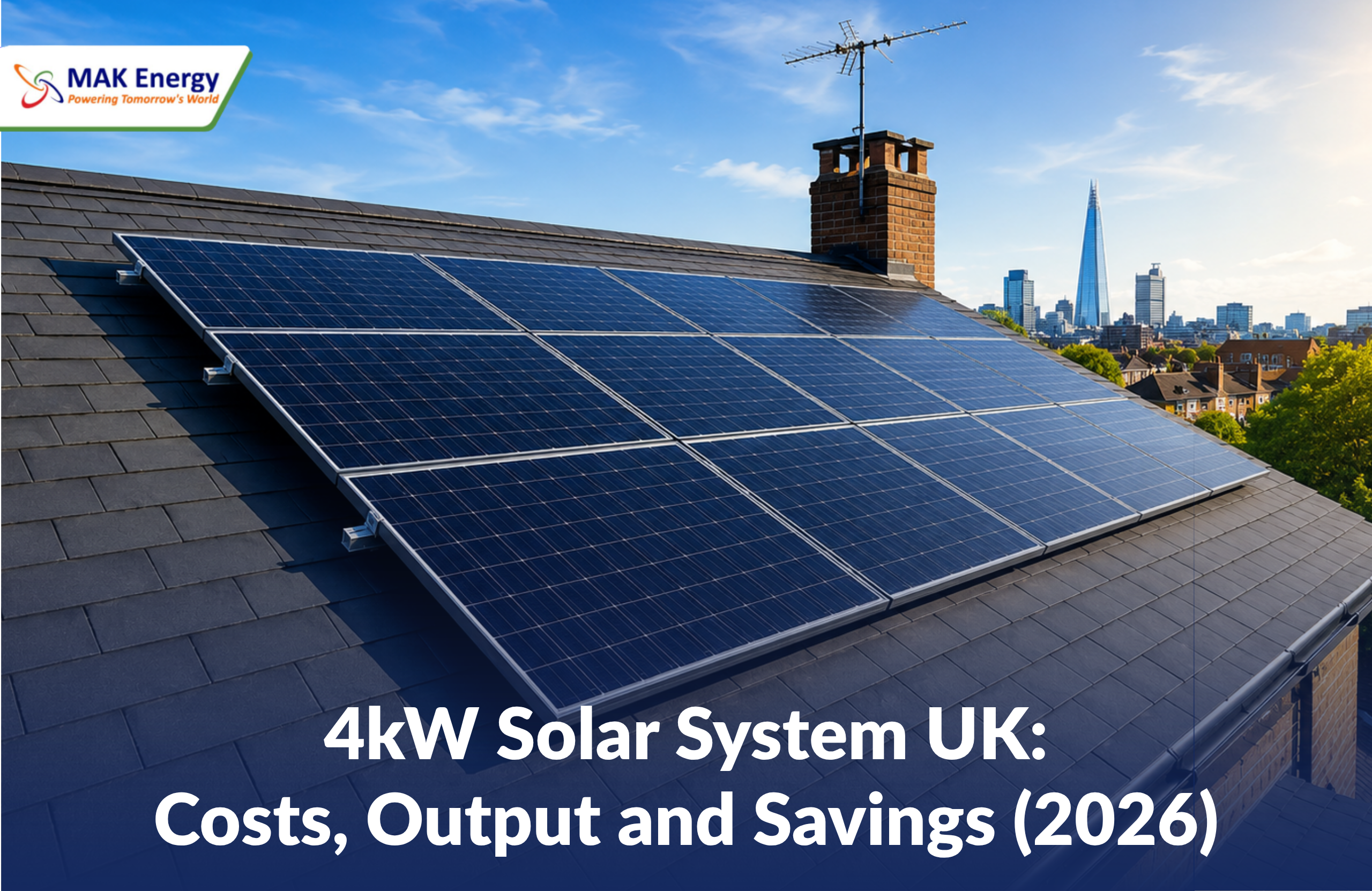
A 4kW solar system has a peak power rating of four kilowatts. Under ideal conditions, it produces around 4,000kWh of electricity per year, though the real-world figure in the UK is closer to 3,400kWh, because British weather rarely hits the standard test conditions panels are rated against.
You’ll usually need 9 to 10 panels to build a 4kW system, depending on their wattage. With 450W panels, nine is enough. With 400W panels, you’ll need ten.
It’s the most common system size in the UK, and for good reason, it matches the electricity consumption of most 2 to 4-bedroom homes.
How much does a 4kW solar system cost?
A 4kW solar system costs between £5,000 and £6,500 to buy and install in 2026. That price covers everything: panels, inverter, mounting hardware, labour, and MCS-certified installation.
Solar prices have dropped around 17% since 2023. That trend, combined with 0% VAT on solar installations (in place until March 2027), makes this one of the most affordable moments in a decade to go solar.
What affects the final price:
The price you pay depends on a few things. If your roof is slate, multi-pitch, or difficult to access, expect to pay a bit more in labour. The panels themselves vary; premium monocrystalline panels cost more than budget options, but they hold up better on grey days, which matters in the UK. Some roofs have shading from chimneys or nearby trees, and if yours does, your installer might recommend optimisers or a hybrid inverter to claw back lost output. That adds to the cost, but it’s usually worth it. Where you live plays a part as well. Installers in London and the South East tend to charge more than those in other parts of the country.
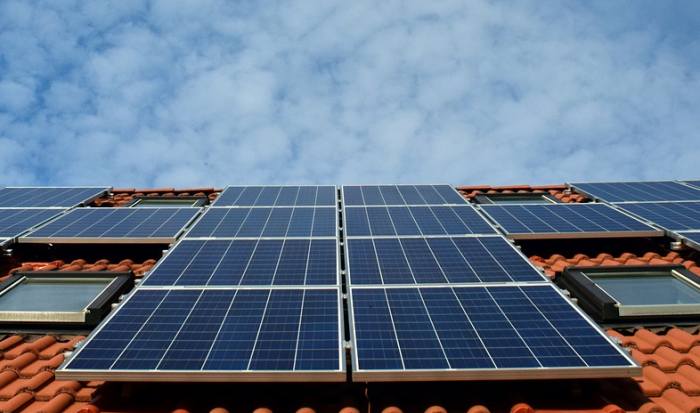
At MAK Energy, every quote includes a full property survey so you know exactly what you’re paying for before anyone gets on your roof.
Typical 4kW solar system costs in 2026:
| System | Cost (inc. 0% VAT) |
| 4kW solar panels only (no battery) | £5,000 – £6,500 |
| 4kW system + 5kWh battery | £7,000 – £9,000 |
| 4kW system + 9–10kWh battery | £9,000 – £10,500 |
How much electricity does a 4kW solar system generate?
A 4kW system generates around 3,400kWh per year across the UK on average. But where you live makes a real difference.
| Location | Estimated Annual Output |
| Glasgow | ~3,150 kWh |
| York | ~3,600 kWh |
| Birmingham | ~3,650 kWh |
| London | ~3,840 kWh |
| Exeter | ~4,000 kWh |
Roof orientation matters too. A south-facing roof at 30–40 degrees gets maximum output. East or west-facing roofs are still viable; they just spread generation across morning and afternoon rather than peaking at midday.
How much will you save on your bills?
At the current electricity price cap of 27p/kWh, a 4kW system saves most households £610 to £660 per year. Here’s how that breaks down:
- 1,700kWh used directly (50% self-consumption): saves ~£460/year
- 1,700kWh exported to the grid at 9–12p/kWh via SEG: earns ~£150–£200/year
What is the 4kW solar system with battery price in the UK?
Adding a battery to a 4kW system costs an extra £2,000 to £3,500, bringing the total 4kW solar system with battery price to around £7,000 to £10,000.
The logic is straightforward. Without a battery, you export surplus electricity at 9–12p/kWh. With one, you store it and use it in the evening instead of buying from the grid at 27p/kWh. You’re saving more per unit, even if you’re earning less in export payments.
With a 5–6kWh battery, your self-consumption jumps from around 50% to 80%. Annual savings rise to roughly £735 or more. Since February 2025, 0% VAT also applies to standalone and retrofitted batteries, so even if you already have panels, adding storage is now significantly cheaper.
Payback with a battery is 8–12 years rather than 6–8. But most homeowners find the energy independence and bill protection well worth it, especially if they’re on a smart tariff like Octopus Go, where you can charge your battery cheaply overnight.
Are there grants available for a 4kW solar system?
Yes. Several schemes can reduce what you pay.
Until March 2027, solar panels and batteries qualify for 0% VAT, worth several hundred pounds on a standard install and one of the most straightforward savings available right now. On top of that, the Smart Export Guarantee (SEG) means energy suppliers are required to pay you for every kWh you export to the grid, with rates currently ranging from 6p to 15p/kWh depending on your supplier and tariff.
If your household income is below £31,000, or someone in your home has a qualifying health condition, ECO4 may cover part or all of your installation cost. The Warm Homes Plan, launched in April 2025, extends similar support to lower-income households and social housing tenants through funded energy upgrades, including solar.
To access SEG payments, your installer must be MCS-certified. All MAK Energy installations come with MCS certification as standard.
FAQ
How much does a 4kW solar system cost in the UK?
Between £5,000 and £6,500 fully installed, including 0% VAT. Prices vary based on roof type, panel brand, and where you live.
What is the 4kW solar system with battery price?
Expect to pay £7,000 to £10,000 for a 4kW system with a 5–6kWh battery. Battery costs have fallen sharply, and 0% VAT now applies to storage too.
How many solar panels does a 4kW system need?
Usually 9 to 10. Nine 450W panels get you to 4.05kW. Ten 400W panels give you exactly 4kW. The right number depends on the panel wattage your installer uses.
How long until it pays for itself?
Roughly 6 to 8 years without a battery, 8 to 12 years with one. Panels last 25+ years, so you’ll enjoy free electricity long after the break-even point.
Is a 4kW system enough for my home?
For most 2–4 bedroom homes using around 3,000–3,500kWh per year, yes. If your consumption is higher, a 5kW or 6kW system may serve you better. MAK Energy will size your system correctly during your free survey.